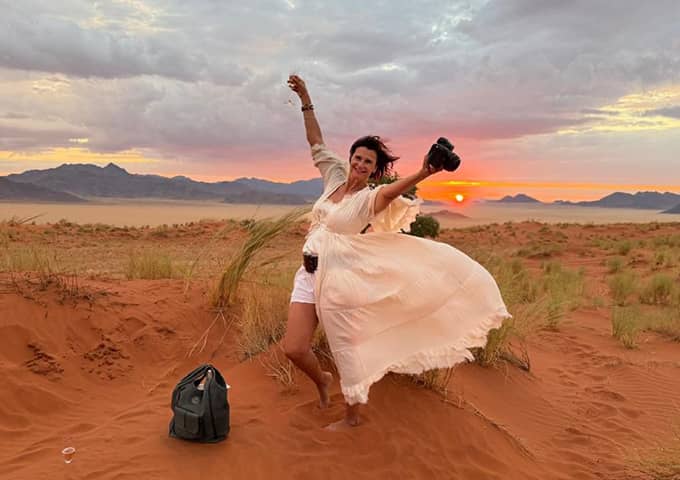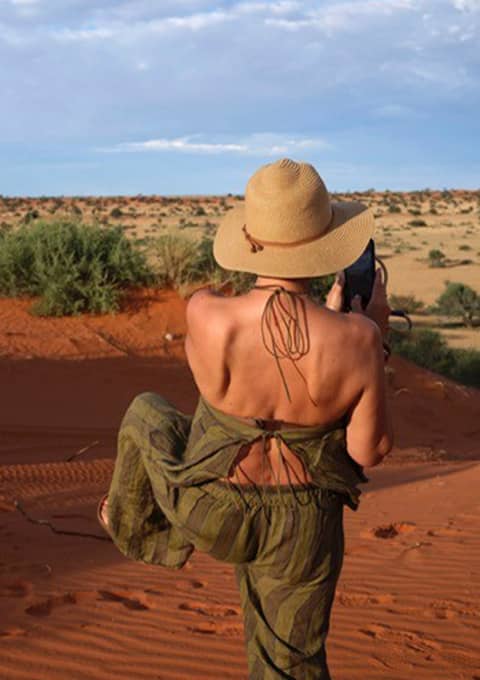
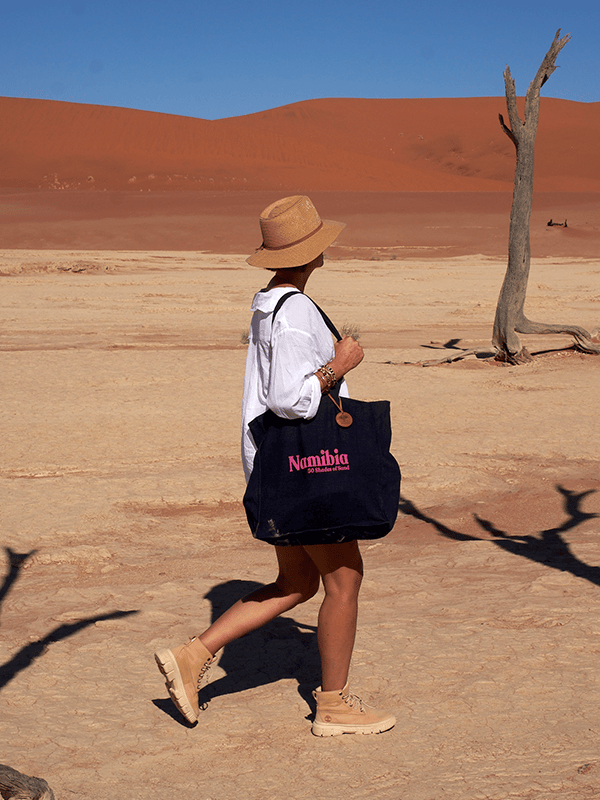
This year has already gifted me something truly special: a road trip through the south of Namibia. Into the desert. Into that vast, red silence that always feels like returning to something ancient inside myself.
My first stop: the Kalahari. The eastern part of Namibia opens into this immense semi-arid savannah, with its iconic rolling red dunes and hardy vegetation that survives against all odds. Often called
the “place without water,” and yet it carries life in the most resilient and beautiful way. Oryx move like sculptures across the horizon, springbok leap through the light, and somewhere out there, cheetahs glide over the sand. It is also the homeland of the San people, the true keepers of this land’s quiet wisdom. There is something about the red dunes of the Kalahari. They don’t overwhelm you. They don’t compete for attention. They simply exist: grounded, calm, eternal. And standing there, you feel small. But not insignificant. Just beautifully placed within something much greater.
On my way south, before the dunes fully unfolded around me, I stopped in Stampriet. A small town, modest and quiet. And there — in the middle of what seems like nowhere — I found something extraordinary.
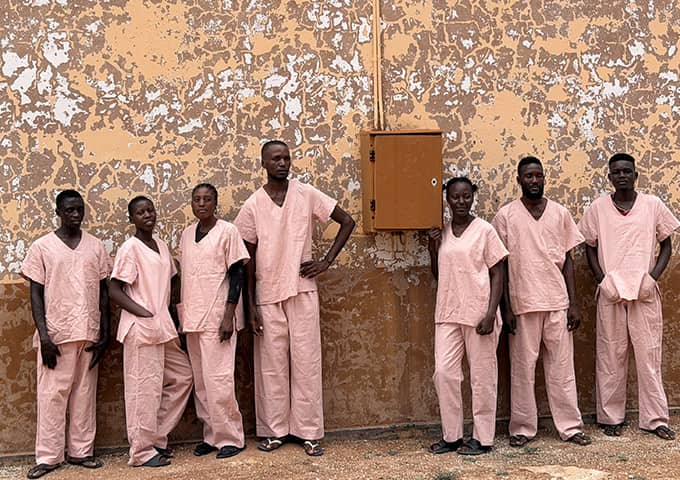
The Mill. What is happening there deeply moved me. The company trains and employs people from the Nama and Ovambo communities in the southern Namibian desert, transforming them into skilled artisans. Not just offering employment, but offering dignity. Mastery. A craft that can be carried with pride and passed down to children.
A trade that becomes part of identity. On their website, they quote Nelson Mandela: “Overcoming poverty is not an act of charity, it is an act of justice.” Standing there, watching the process unfold with
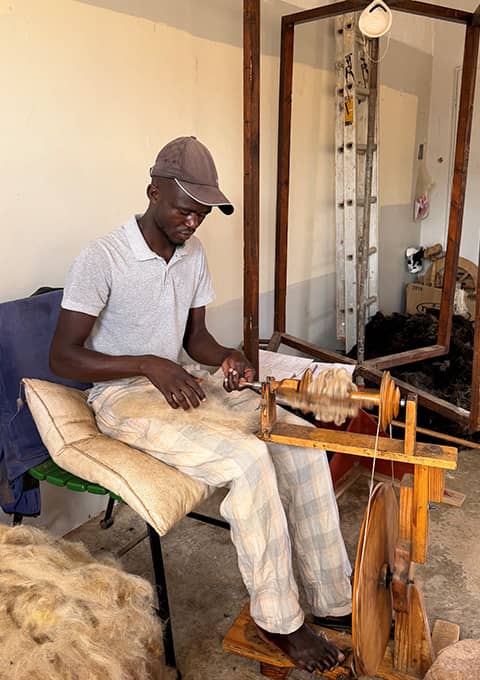
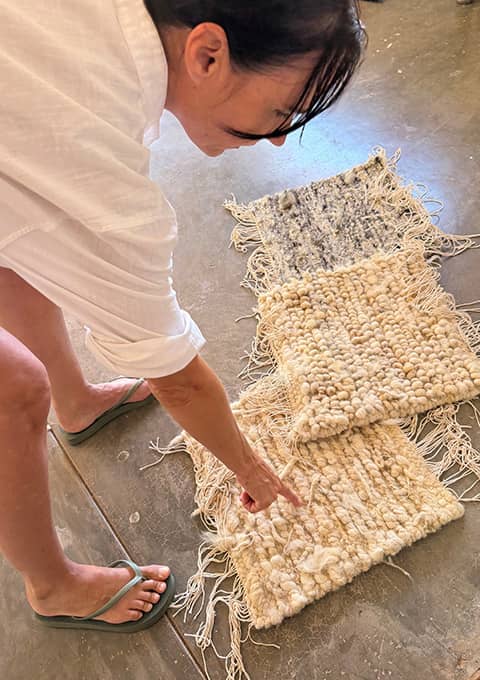
my own eyes, I understood why they chose those words. Because this is not about sympathy. It is about creating real value. Real skill. Real opportunity. And you can feel that difference in the atmosphere of the place. I went on a full tour and experienced the entire lifeline of their work. From the wool coming directly off the Karakul sheep, a special Swakara breed raised in southern Namibia — to the final weaving of a finished carpet.
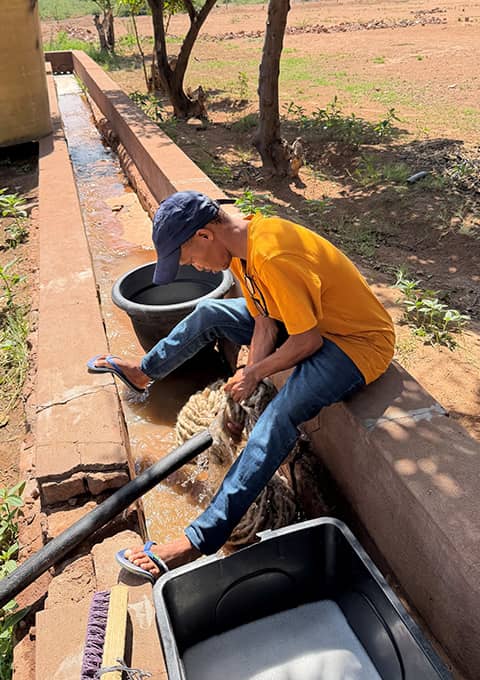
The journey begins in the desert itself. In this harsh climate, shearing the sheep twice a year is actually a kindness. The wool is washed, hand-carded, shaken free from the red dust and little thorns collected during the sheep’s search for food. Then it dries under the wide African sun before being spun into thick yarn. Every single step is done in-house: shearing, washing, carding, spinning, weaving.
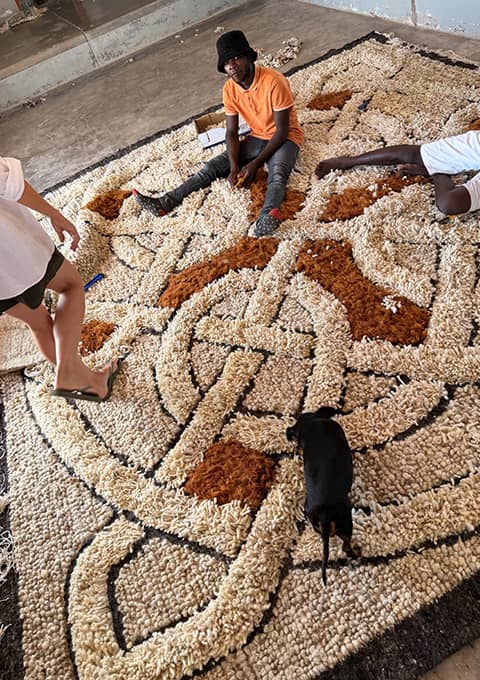
Standing beside the upright looms, watching the warp form the strong foundation of the carpet while the weft is woven carefully by hand, I was absolutely amazed. The rhythm of the hands. The patience. The quiet concentration. And the pride. You can feel it.
Each rug is made of 100% Namibian Swakara wool, in its natural tones: black, charcoal, brown, umber, silver, cream. No artificial colours. No unnecessary decoration. Just nature’s own palette. Swakara wool itself is remarkable. Naturally coated with lanolin to protect the sheep from the harsh desert conditions, it becomes an incredibly durable, lasting fibre. Even certified with the Furmark seal, a commitment to environmental responsibility and animal welfare that requires annual audits. That is not a small thing.
But what touched me most was something very simple. When I walked barefoot across one of the finished carpets, my toes literally felt the authenticity. The sheep. The sun. The red dust. The hands that worked
with patience and skill. It felt alive. In our modern world, everything must be faster, bigger, more efficient. We produce more, consume more, rush more. And sometimes I feel we are losing our connection to the natural resources around us, and to the beauty of using them respectfully and thoughtfully.
But there, in Stampriet, at the foot of the Kalahari where the red sand begins, I felt that connection again. It was grounding. Honest. Real. I left The Mill deeply inspired. And yes, my next carpet will absolutely come from there. Perhaps when I walk across it at home, I will feel a little piece of the Kalahari beneath my feet.
But more importantly, I will know that I own something truly natural. Something created with time, skill, dignity, and purpose. Made by talented hands in the middle of the desert.
And for me, that is luxury in its purest form. Until the next stop on this road trip …
With a heart still dusted in red sand,
Sandra