On the decision to separate content from commerce — and why it makes both better.
If you’ve landed here from the MyEisha Namibia shop, you may have noticed something: this isn’t the shop. It’s connected to it, it talks about it, it links to it — but it lives separately. That was a decision, not an accident.
Here’s the thinking behind it.
Two Different Jobs
An online shop has one primary job: help someone find a product they want and make it easy to buy. Everything in a well-built shop is oriented toward that — clear product presentation, minimal friction, fast checkout. Distractions from that goal cost conversions.
A blog has a completely different job. Its job is to create context, build connection, tell stories, and earn trust over time. Scroll depth, time on page, returning visitors — completely different metrics, completely different design logic.
When you try to do both in one place, you usually end up compromising on both. The shop gets cluttered with content that slows it down and dilutes the purchase intent. The editorial content feels cramped and commercial when it’s squeezed into a product platform.
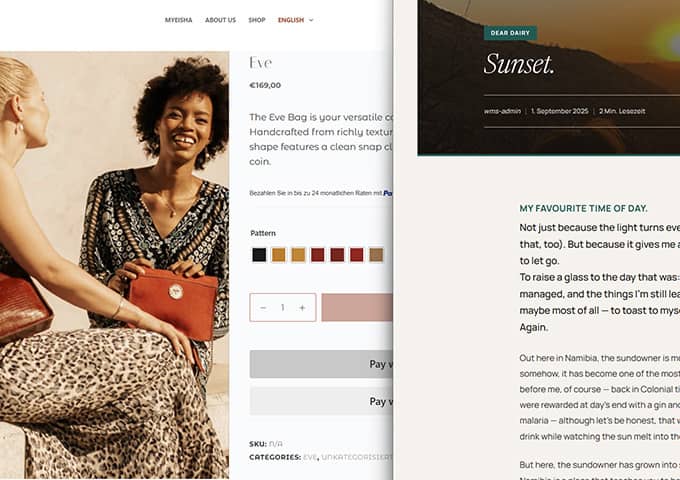
Separating them lets each do what it’s built for.
What the Blog Does for the Shop
The link between the two is real and intentional — it just runs in the background. A blog post about the design process behind a product creates context for that product. A story about where a material comes from adds meaning to what someone’s buying. A behind-the-scenes post builds trust with readers who haven’t purchased yet.
None of that replaces the shop. But it supplements it in ways the shop can’t supplement itself. You can’t put a 1,200-word origin story on a product page without breaking the buying experience. But you can write that story here and link to the product naturally.
What the Shop Does for the Blog
The relationship runs the other way too. The shop gives the blog something concrete to point to. These aren’t abstract posts about lifestyle or aesthetics floating without purpose. Every piece of content connects back to something real: a product you can actually buy, from a brand that actually makes it.
That grounding matters. It’s the difference between editorial content that feels purposeful and content that feels like it’s filling space.
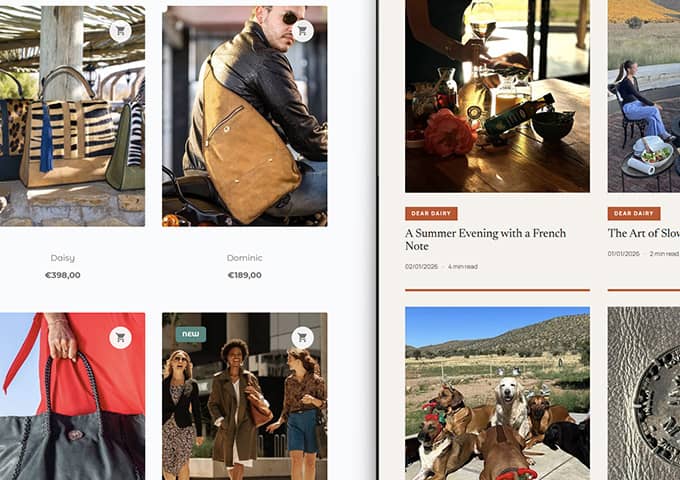
How the Two Sides Connect
The practical connection is kept intentional without being pushy. Relevant shop links appear in articles where they fit naturally. Categories on this blog roughly mirror the themes of the brand. And every few posts, there’s a direct CTA to the shop — not as a hard sell, but as a natural next step for readers who are interested in more than just the words.
The goal is a reader who finishes an article here and heads to the shop not because they were pushed, but because they were genuinely curious.
Why This Matters for Brands Like MyEisha
Not every brand needs to think about this. But for a brand built around craft, story, and a specific point of view — separating content from commerce creates space for the brand to breathe. It says: we have more to say than just „buy this.“ And that turns out to be a very effective way to build the kind of customer relationship that lasts beyond a first purchase.
Die Kommentare sind geschlossen.